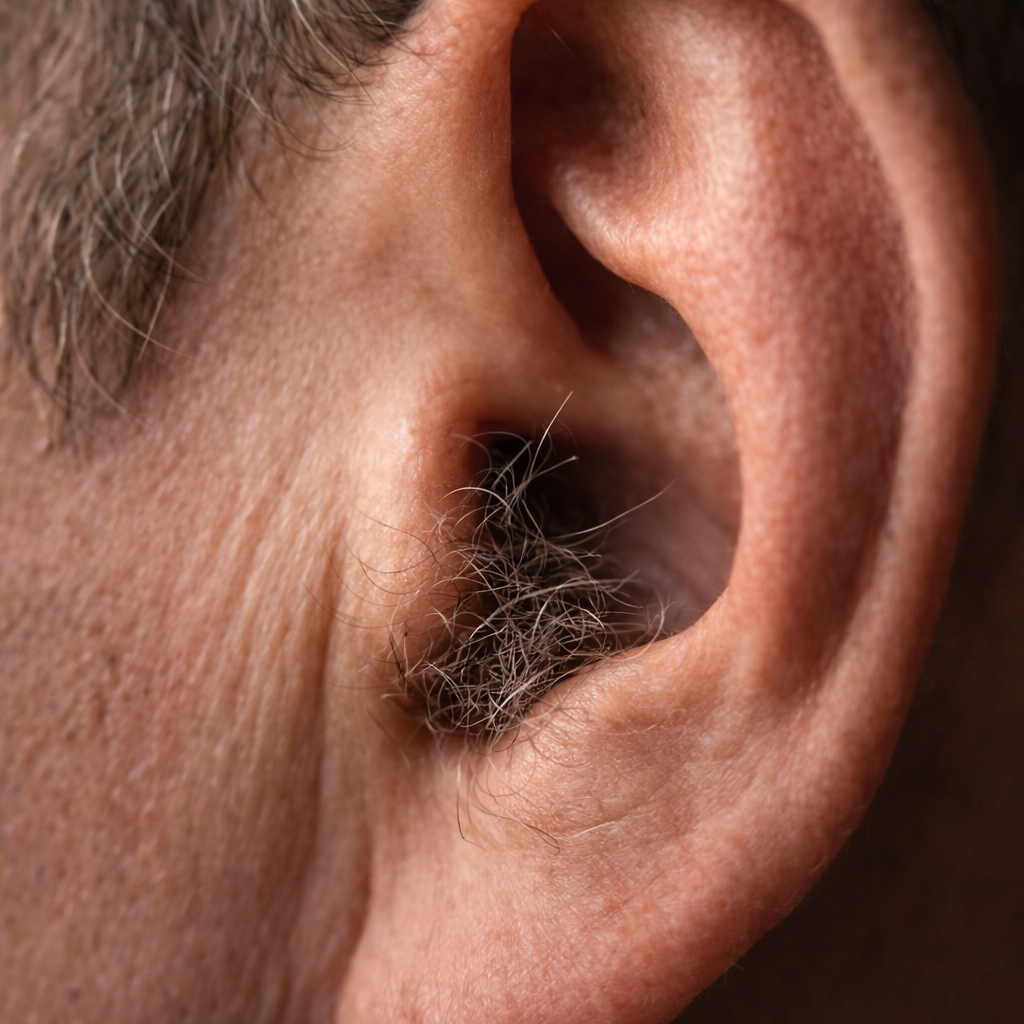
Did you know that hair growing on your ears is actually a normal part of getting older?
Many people first notice it later in life—often after their 50s—and immediately assume something is wrong. Some feel uncomfortable about it, while others try to hide it or joke about it. In reality, it’s simply a natural change caused by aging, hormones, and genetics—not a health problem.
As the body ages, changes don’t happen evenly. While hair on the head may become thinner, it can appear thicker in areas like the ears, nose, or eyebrows. This happens because different hair follicles respond differently to hormones over time. Hormones like testosterone influence growth in specific areas, which is why men tend to notice ear hair more, although women can experience it too, especially after menopause.
Genetics also play a big role, affecting how much hair grows, how thick it is, and where it appears. Everyone’s body responds differently, which is why some people notice it more than others.
Interestingly, ear hair has a natural purpose. It helps trap dust and small particles and can protect the ear canal. Even though it may seem unusual as it becomes more visible, it’s simply the body continuing its natural function over time.
There are many myths about ear hair—such as it being linked to disease, poor circulation, or serious health issues—but these are not true. It’s also a misconception that trimming makes hair grow back thicker; it only appears that way because of the blunt cut.
If someone chooses to remove it, it should be done carefully using proper tools. But in reality, there’s nothing wrong with it at all. Ear hair is just another visible sign that the body is aging naturally.
In simple terms: if you notice hair growing on your ears, there’s no reason to worry—it’s just a normal part of life.
Leave a Reply