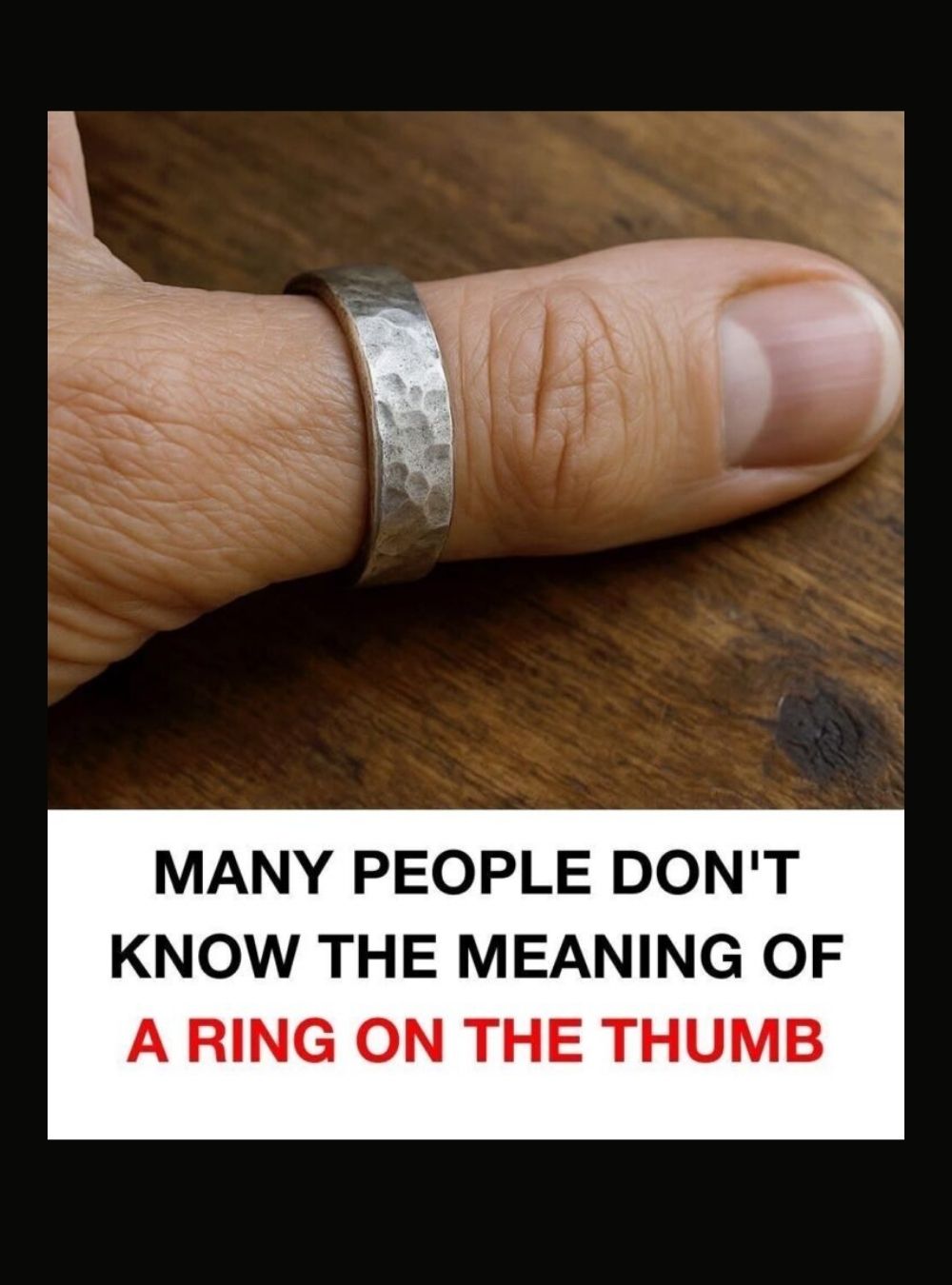
For many, jewelry pieces are simply accessories—elegant touches that complete an outfit or reflect fleeting trends. But for those who choose the placement deliberately, rings hold a much deeper, more potent symbolism. This is particularly true when a ring is chosen for the thumb. Because the thumb stands physically apart from the other fingers, it is universally seen as a symbol of independence, strength, and empowerment. A thumb ring, therefore, transcends typical adornment; it is a declaration of freedom, a bold sense of individuality, and a rejection of conformity.
Interestingly, while the core message of strength remains, the underlying meaning subtly shifts depending on whether the wearer is a woman or a man. These symbolic differences are rooted in history, societal expectations, and modern codes of identity and self-expression. The thumb ring is bold, unique, and timeless, making it one of the most intriguing and psychologically revealing accessories in global jewelry culture.
I. The Thumb: A Psychological and Historical Symbol of Authority
Source: google
To understand the thumb ring’s significance, one must first recognize the thumb’s unique role. As the strongest, most independent digit, essential for grip and tool use, its symbolism naturally tilts toward power and autonomy.
The Kinesthetic Symbolism
In anatomy and human movement, the thumb is the digit of opposition—it is the only finger capable of touching the others, making tool use and refined motor skills possible.
Independence: Psychologically, this physical separation makes the thumb an immediate symbol of individual will and nonconformity. A ring worn here is often interpreted as a wearer who is charting their own course, separate from the crowd.
Empowerment: The strength of the thumb, essential for grip, directly translates into a message of inner power and self-reliance. The ring emphasizes the foundational strength of the hand.
Ancient and Historical Roots
Historically, placing a ring on the thumb was a practical choice tied to utility, which evolved into a mark of rank and prestige.
Archery Rings: In many ancient Asian cultures (including China, Korea, and Turkey), the thumb ring’s origin was purely functional: it was a thick, protective band used by archers to prevent the bowstring from cutting the thumb during the release of an arrow. These rings quickly evolved from simple utility into elaborate accessories made of jade, ivory, or precious metals, directly symbolizing the wearer’s martial skill and high status.
European Authority: In certain European historical contexts, larger, decorative rings were occasionally worn on the thumb by men of status or authority, reinforcing the universal connection between the strongest digit and commanding presence.
II. What a Thumb Ring Symbolizes for Women: Defiance and Self-Sovereignty
For women, the modern thumb ring largely operates as a powerful statement of self-possession that often directly counters traditional gender expectations.
Independence & Boldness
Women who choose to wear thumb rings are frequently perceived as possessing bold, outgoing personalities. Their choice signals an unafraid willingness to challenge traditional, often restrictive, social norms about femininity and jewelry placement.
Non-Traditional Focus: Unlike engagement or wedding rings (which signal relationship status) or delicate pinky rings (which signal refinement), the thumb ring is unlinked to courtship or domesticity. It is a ring worn for the self, symbolizing self-defined worth and confidence.
The Unbothered Persona: The thumb ring suggests a wearer who is comfortable taking up space and is unbothered by external judgment. It projects an image of a confident, self-reliant individualist.
Leave a Reply